
Begijnhof in Amsterdam
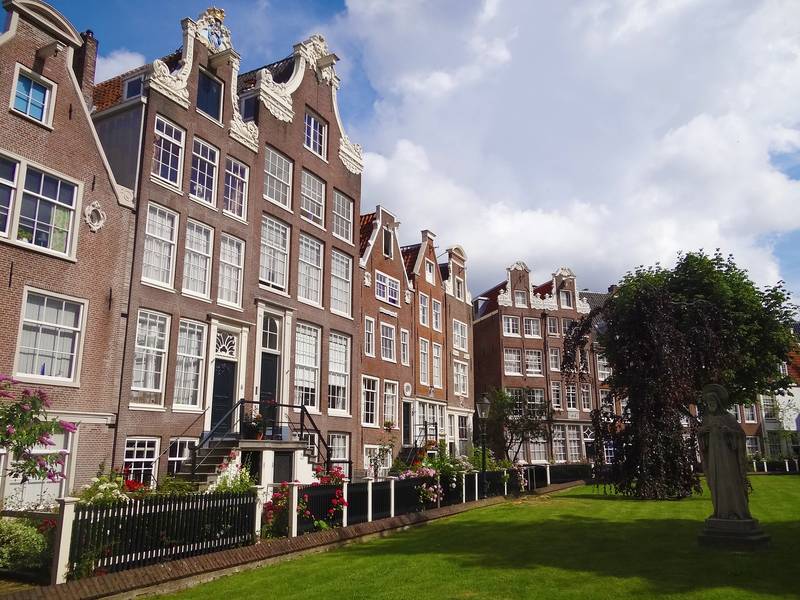
The Begijnhof is an enclosed courtyard dating from the early 14th century. Nothing survived of the earliest dwellings, but the Begijnhof, which is cut off from Amsterdam's traffic noise, still retains a sanctified atmosphere.
Purpose of Begijnhof
The Begijnhof was originally built as a sactuary for the Begijntjes, a Catholic sisterhood who lived like nuns, although they took no monastic vows. Houses in Begijnhof are still occupied by single women, so respect their privacy and also be quiet.
Beguines lifestyle
The women were not nuns nor did they live in the seclusion of a convent. And they did not make lifelong vows. They did have to be unmarried and to make a vow of chastity for as long as they were part of the community. Also to promise obedience to the parish priest. But since they were not expected to make a vow of poverty, they were free to manage their own possessions. They could renounce their vows at any moment and leave the Beguinage. This happened for example when they wanted to get married.
The oldest house in Amsterdadm
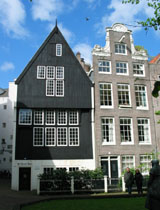
Begijnhof includes the Amsterdam's oldest surviving house "Het Houten Huis" (No. 34.) dating from around 1420. It is one of only two wooden-front houses in the city, as timber houses were banned in 1521 after a series of catastrophic fires. Most of the houses in the Begijnhof were not built until after the 16th century. On the adjoining walls, there is a fascinating collection of wall plaques with biblical themes.
Engelse Kerk in Begijnhof
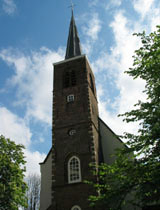
Southern fringe of the square is dominated by the Engelse Kerk (English Church) which dates from the end of 15th century and possesses its original medieval tower.
Engelse Kerk dates from the end of the 14th century. There had been a chapel in the Begijnhof in 1397 on the north side of the courtyard. An extra piece of land to the south was purchased in 1417 and in the same year the building of a new church began on the site of the present building. Disastrous fires during the 15th century, in 1421 and 1452 heavily damaged the church building.
The church is known as the Engelse Kerk (the English Church). The English title is now the English Reformed Church, perhaps to distinguish it from the Anglican congregation which was founded late in the 17th century and now found in the Groenburgwal.
Sunday worship at 10.30 am. Visitors are welcome.
Begijnhof in historic documents
It is not known when exactly the Beguinage was founded. But deducting from mentiones in historic documents we can approximate it's beginnings.
Around 1150, a group of women came here to live in a religious community, primarily to look after the sick. These were, effectively the first 'Beguines' although the name was not yet used.
The first time the word 'beguines' was used was in an official document of 1307 found in the accounts of the Bailiff of Amstelland.
Another document, dated 31 July 1346, speaks of the Beghijnhuis (house of the Beguines) ceded to them by one Cope van der Laene on St. Peter's Eve.
In 1393, on 7 August, Albrecht van Beieren (Albert of Bavaria) ratified the regulations of the Beguinage by letter, taking them under his protection and giving a number of rules for those in the Beguinage to obey. He also stipulated that a woman could only be admitted as a Beguine after she had lived at the Beguinage for at least 18 months.
Begijnhof opening hours
Nowadays Begijnhof is one of Amsterdam's top 10 attractions. It is open daily from 8:00 to 17:00.
Civic Guards Gallery (Schuttersgalerij)
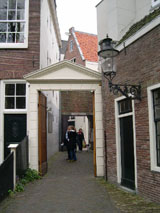
A part of the exhibit of the Amsterdam Historical Museum, consists of an impressive gallery of old portraits of the important citizens of Amsterdam - men and women. In a high, naturally lit corridor, big 17th century paintings were exhibited. The gallery is accessible to all visitors from the Begijnhof via a huge glass gate, located at the far end of the courtyard. Leave the Begijnhof and immediately take left to the Gedempte Begijnesloot dead end street. The entry to the gallery is free.